
For Marketing Managers
Your ads work. Then the leads die in WhatsApp — and you take the blame.
Without proof of what happens after a lead arrives, every budget meeting becomes a trial — and your budget gets cut first. AI reads every lead chat and carries the proof through to closing.
Leads tracked from ad to closing
Objections & drop-off points read from chats
Customer language becomes your next ad copy
15-minute demo via WhatsApp — no commitment, no credit card, answered by a human.
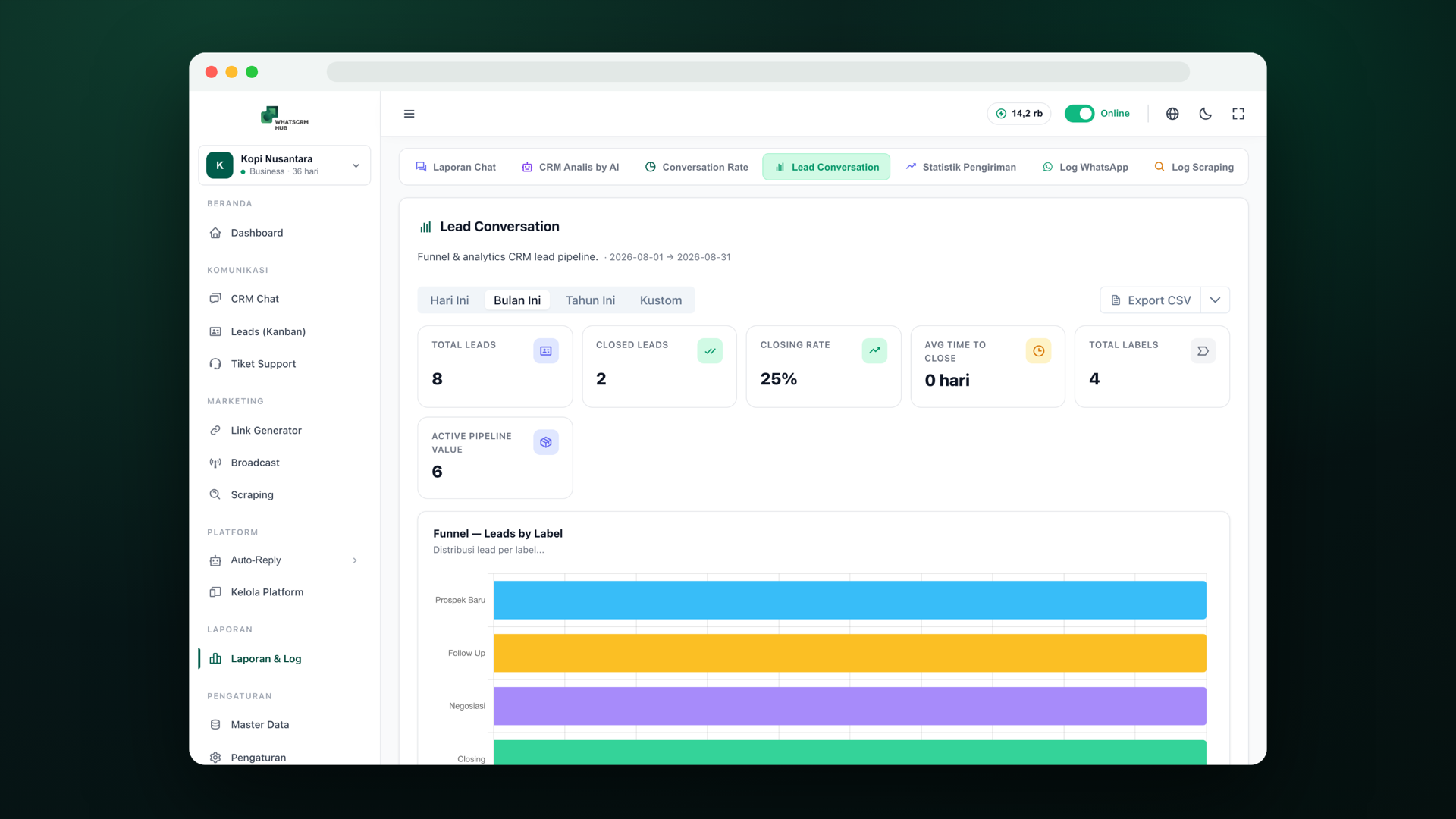
Product illustration — not real campaign data.
 Just Type It
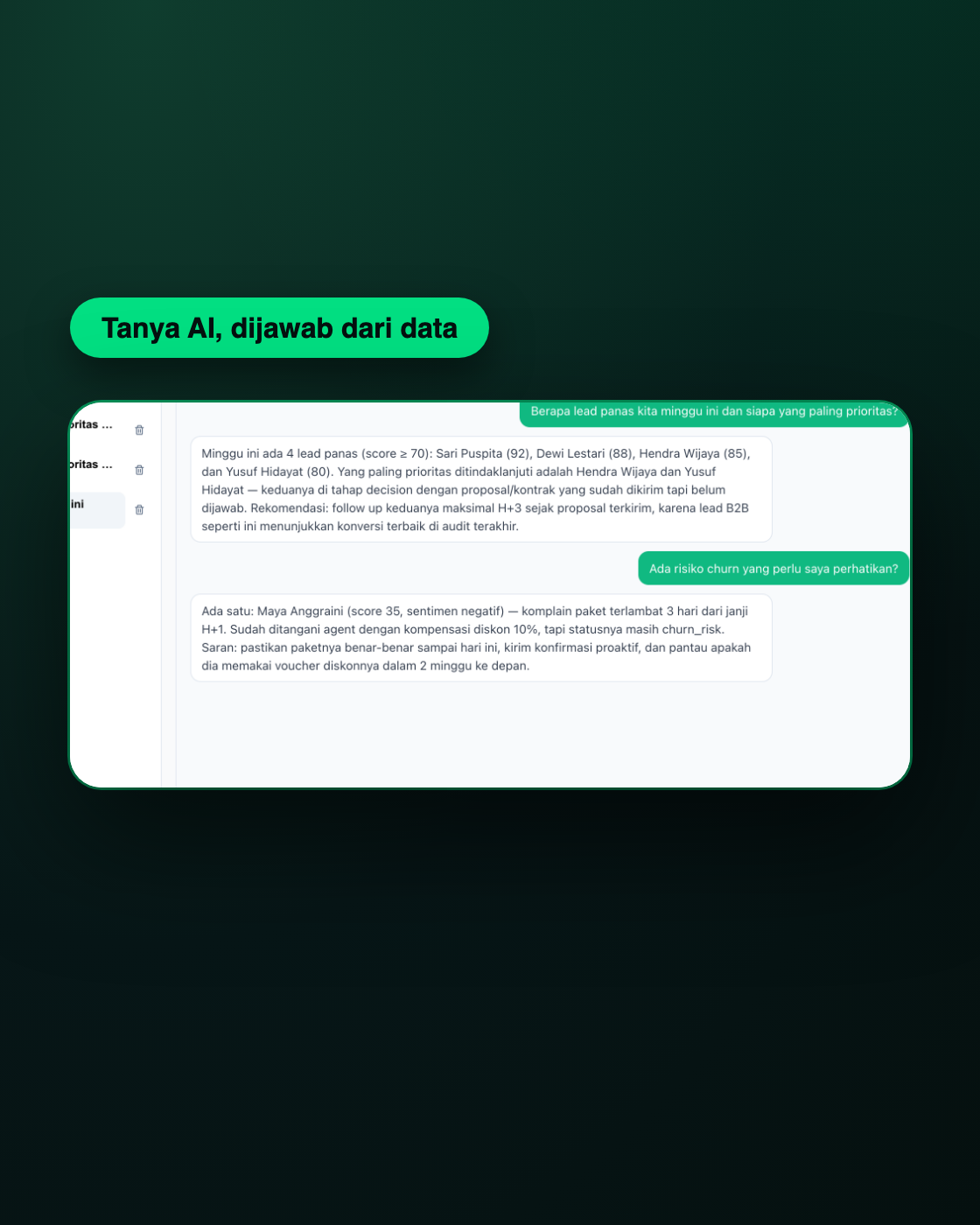
Questions no pixel or ads dashboard can answer — because the answers live inside the chats.
Ad platform attribution stops the moment a lead taps "Chat on WhatsApp". That is exactly where this AI starts reading.
“Which campaign makes money — not just leads?”
Every lead carries its source campaign through to closing — cost per closing per channel, ready for the budget meeting.
“At which sentence do leads stop?”
The AI reads every conversation's drop-off point: after the price? after shipping? or left hanging by sales? The leak shows its stage.
“Which objections kill the most closings?”
Too expensive, quality doubts, competitor comparisons — summarized from real chats, feeding your next angle and landing page.
“What words do buying customers use?”
The customer's own language from closing chats — your best ad copy has usually already been typed by your customers.
“Are my leads being worked, or left to rot?”
First-touch speed and follow-up per lead are visible — leakage stops being an accusation without evidence.
“Does lead quality differ across channels?”
Not by cost per lead — by conversation content: which channel brings serious questions, which brings window shoppers.
 The Campaign Report
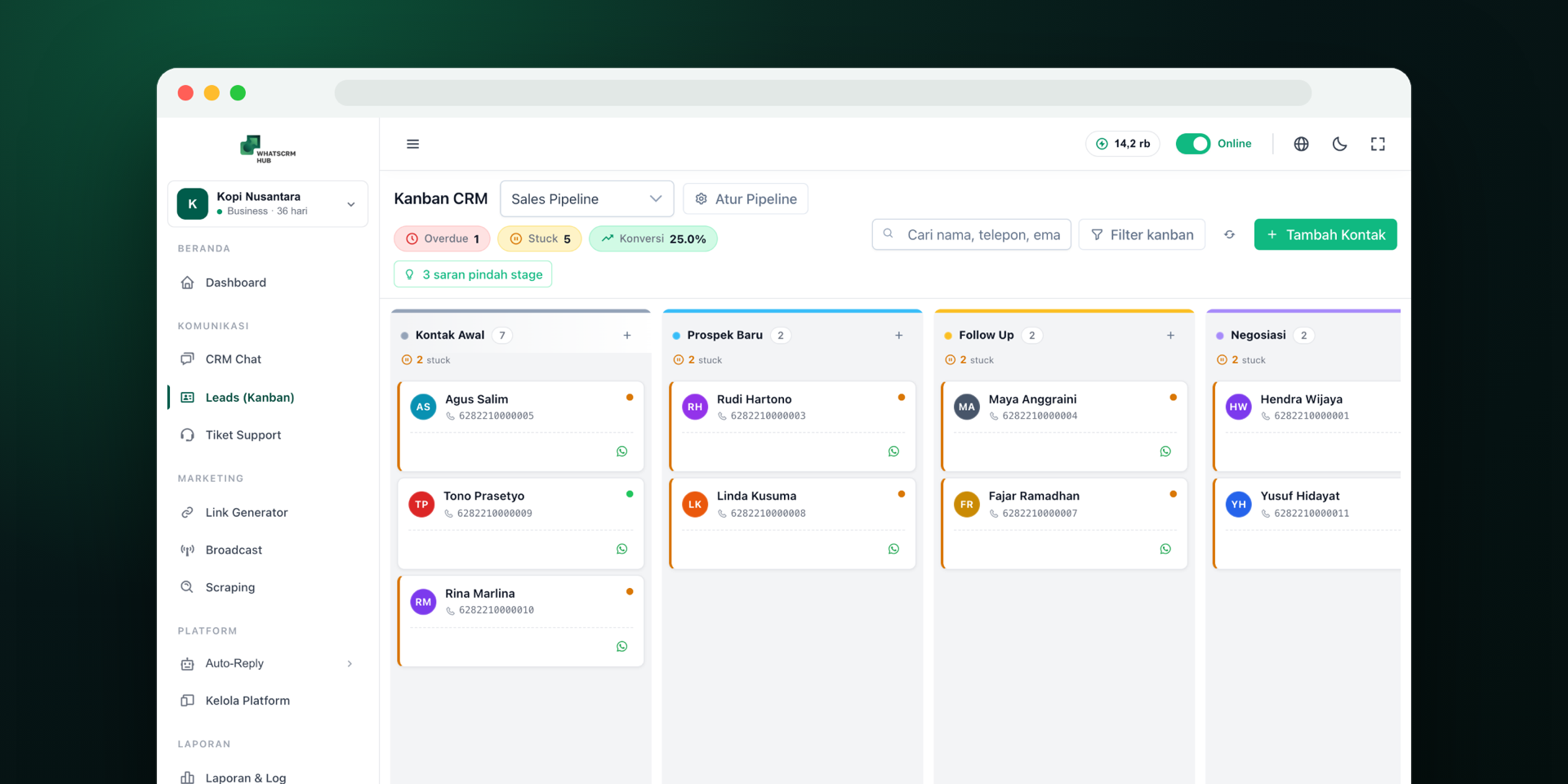
A report that does not stop at lead count.
Yesterday's lead conversations, analyzed into one summary: what is moving, what is leaking, and why.
Sample report format — the numbers above are illustrative, not statistics.
 Goes Where You Go
Campaign fates tracked from anywhere — not just from your desk.
The mobile app is included: campaign performance, rising objections, and neglected leads readable from your phone in real time.
Campaigns in your hand
Incoming leads and per-channel quality read from your phone — when a campaign goes live, you know first.
Alerts for expensive leads left to rot
Serious leads untouched by sales get notified — save them before they go cold, wherever you are.
Data ready before the meeting
Called into a sudden meeting? Per-campaign numbers through to closing open from your phone in seconds.
Sample report format — the numbers above are illustrative, not statistics.
The Difference
Other tools count leads. This AI reads their conversations.
Pixels and ads dashboards stop when the lead enters WhatsApp. That is exactly where the battle for the closing happens — and where this AI works.
A budget whose results can be proven is never the first one cut.
Bring last month's campaign data to a 15-minute demo — see how many leads stopped over something you could actually fix.
Book a Tracking Demo
15-minute demo via WhatsApp — no commitment, no credit card, answered by a human.
The Foundation Stands
And every lead's trail is stored as a company asset.
The leads you pay dearly for no longer evaporate on a sales rep's phone without a trace.
The fear
“I get blamed for leads that were never actually followed up.”
The answer
It is plainly visible how many leads arrived, how many were touched, and how long they sat. The discussion shifts from finger-pointing to fixing the leak.
The fear
“My budget gets cut because I cannot prove the results.”
The answer
When closings trace back to their source campaign — with the reasons other leads stopped — the budget stops reading as a cost and starts reading as an investment.
The fear
“The sales team will not use the system, so the data will be full of holes.”
The answer
The core data forms automatically from conversations already happening — not from extra forms anyone has to fill in.
In Their Words
What changed once the system was running.
Still Unsure?
Questions from marketing teams.
At a Glance
Key facts about this page.
Does your report stop at lead count? WhatsCRM Hub AI reads every ad lead's conversation: how many were serious, at which sentence they stopped, what objections came up, and which campaign actually made money.
- WhatsCRM Hub is an AI-powered business communication platform — this page is for Marketing Manager.
- AI that reads every ad lead's chat — proving ROI through to closing, and telling you why the rest stopped.
- Leads tracked from ad to closing
- Objections & drop-off points read from chats
- Customer language becomes your next ad copy
- Includes a mobile app; a self-hosted option offers full data control.
A budget that cannot prove its results is always the first one cut.
Starting this month, your report does not stop at lead count — it goes all the way to how many became revenue, and why the rest did not.
Ask on WhatsApp
15-minute demo via WhatsApp — no commitment, no credit card, answered by a human.